
OVHcloud AI Summit 2026 framed sovereign AI as a stack: GPU supply, Olala mini LLM, and production AI agent services.
Organisations investing in AI ask four questions: where is my data, who controls the chain, how much will it cost in six months, and what happens if rules change overnight. OVHcloud addressed these at its 13th annual Summit, renamed the OVHcloud AI Summit, on 19 November at the Carrousel du Louvre before more than 2,000 customers, partners, and developers. The keynote replay and event programme were referenced, and the common thread was that sovereign AI means mastering an entire chain.
Core judgment: the value is in the stack
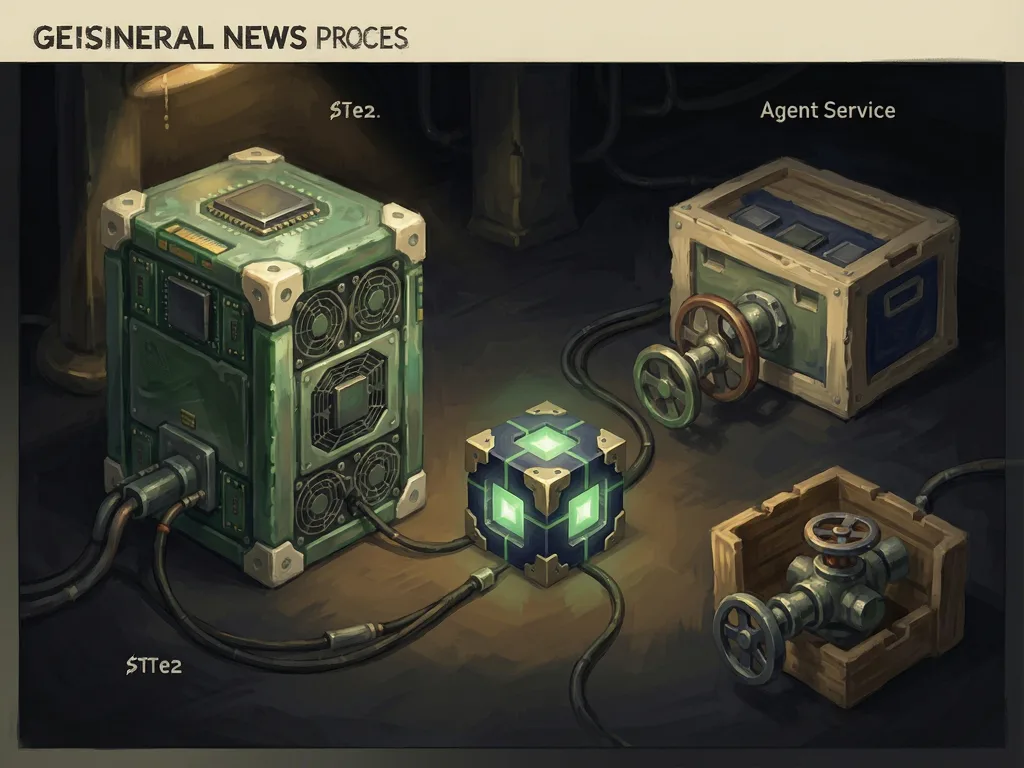
The Summit framed AI not as a single service but as a chain of dependencies. Octave Klaba, OVHcloud founder and CEO, presented the central idea that sovereignty requires control across the full system. Yaniv Fdida, Chief Product and Technology Officer, made this the theme of his presentation: AI is not a product, it is a stack. That stack runs from the electricity powering the GPU to the application opened every morning.
For project owners, this changes the question. The issue is not only how to obtain GPUs, but how to consume them, in the cloud or on-premises, depending on the level of sovereignty sought. The answer depends on infrastructure, model choice, agent runtime, data handling, and operational control.
GPU capacity: from shortage to stated supply targets
One of the keynote’s most direct moments concerned GPU supply. Octave Klaba acknowledged that over the past three years many customers had asked for GPUs without volume limits, and that OVHcloud had not had enough. The company had chosen to reserve capacity for existing customers rather than use it as a sales pitch. That chapter is now closed.
OVHcloud said NVIDIA B300 and Rubin GPUs are arriving in both Bare Metal and Public Cloud across three continents. With 110 megawatts available in its datacentres, the company said it can supply up to 60,000 B300 GPUs or 35,000 Rubin GPUs for economically viable projects.
This capacity is tied to a vertical model: OVHcloud builds its own servers, constructs its own datacentres, cools them with water, and runs its own network. The practical implication for buyers is that GPU access is presented as part of a controlled infrastructure stack, not as a detached cloud resource.
Model strategy: Olala and specialised inference
OVHcloud used the Summit to unveil Olala, described as its first very French LLM. The audience smiled at the name, but the model is linked to fifteen years of research led at Dragon LLM by Olivier Debeugny, now CEO of OVHai LLM. He had previously presented the building blocks of sovereign AI in October at World Summit AI in Amsterdam. Olala is the first model from OVHai labs, which are also working on voice and document search.
The technical detail focused on Olala mini. It was trained on three European public supercomputers and runs on a single CPU server. At Qwant, it already generates the instant answer for 3 million queries a day. OVHcloud said it uses three times fewer resources than the previous model and responds 20% faster.
Yaniv Fdida drew the broader lesson: the future of inference is not one giant model that does everything, but the right, specialised model for each business need. For organisations, this points toward AI with more predictable costs, because each task uses a model sized to the task rather than a single oversized system.
Agents: from two hundred demos to production services
The session returned to the two hundred agents discussed earlier and showed that an agent first needs a place to run. AI Fabric, built with Blade.sh by Shadow, was used as the example. Yohann Prigent, Chief Technology Officer of Blade.sh, put it plainly: an agent without a runtime environment is just a chatbot.
Two launches complete the production path. AI Agents hosts, secures, and monitors agents once they leave the prototype stage, with long-term memory and human approval for sensitive actions. AI Search gives agents access to the right passages across millions of a company’s documents. With a single European provider, OVHcloud argued, organisations now have what they need to move an agent from demo to production.
Everyday work: voice, documents, and workspace controls
Jean-Louis Quéguiner’s return gave the keynote one of its more personal moments. Formerly head of data and AI at OVHcloud, he founded Gladia, which joined the group this year. His conviction was that in Europe, voice AI must understand accents, mixed languages, and sentences that start in English and end in another language. OVHcloud tested this on its own phone support, where Gladia voice agents have been handling some calls since 1 September 2026.
The same logic was applied to OVHai Workspace, presented by Guillaume Gojard, Product Director, and Timothée Rebours, Team Leader. On stage, the tool summarised a thread of twenty emails, found a time slot that suited everyone, and caught up on a meeting that had started without the user. This raised the question of whether to trust an AI with emails and documents. Guillaume Gojard’s answer was that OVHcloud makes AI work for users, not on them. Your data stays in Europe, is not used to train models, and the whole Workspace will be end-to-end encrypted in 2027.
Production customers and the trust question
The final highlight gave the floor to nine customers. AIFE, the French government’s financial information technology agency, runs the public e-invoicing platform rolled out in France since September. The platform runs on OVHcloud’s Bare Metal SecNumCloud offering and will eventually handle 4 billion flows. Its director, Emmanuel Spinat, said the era of proofs of concept is over and it is time for AI services in production.
IGN, France’s national mapping institute, hosts its Géoplateforme with OVHcloud, capable of serving up to 55,000 requests per second. The institute is also preparing digital twins of French territories to anticipate the effects of climate change. Skaleet, Ipsos Synthesio, Wiremind, Sekoia, Kbrw, La Poste Santé et Autonomie, and Luganodes rounded out the customer picture. Their businesses range from banking and healthcare to cybersecurity and logistics.
The session returned to the question asked by journalist and speaker Asha Sumputh: who do you trust with your data?
What changes for buyers, and what remains uncertain
For organisations, the Summit’s announcements point to a clearer operating path. GPU availability is no longer presented as the primary bottleneck; the next decision is where and how to consume capacity. Model strategy favours specialised inference instead of one giant system. Agent deployment is framed as needing runtime, memory, monitoring, and human approval for sensitive actions. Everyday tools are positioned around voice, documents, and workspace control with European data handling.
There are still limits. GPU supply is described as available for economically viable projects, not as unlimited access. The Olala results are tied to Qwant and to a specific mini model, not to every workload. Agent production requires runtime and governance, not only a model. Workspace encryption is stated for 2027, not as a present-day guarantee. The 4 billion e-invoicing flows are an eventual target, and the 55,000 requests per second figure is tied to IGN’s Géoplateforme. The broader trust question remains unresolved because the answer depends on controls, contracts, and operational choices.
Key facts from the OVHcloud AI Summit
| Area | What was announced | Why it matters |
|---|---|---|
| Event | 13th annual Summit, renamed OVHcloud AI Summit, on 19 November at Carrousel du Louvre | Frames AI sovereignty as a full-stack issue |
| Audience | More than 2,000 customers, partners, and developers | Shows the announcements are aimed at production users |
| GPU supply | B300 and Rubin GPUs arriving in Bare Metal and Public Cloud across three continents | Moves the discussion from scarcity to consumption model |
| Capacity | 110 megawatts; up to 60,000 B300 or 35,000 Rubin GPUs for economically viable projects | Links AI capacity to datacentre power and infrastructure |
| Model | Olala, first OVHai LLM; Olala mini trained on three European public supercomputers | Emphasises specialised inference over one large model |
| Qwant result | 3 million queries a day; three times fewer resources; 20% faster | Provides a production example of smaller model economics |
| Agents | AI Fabric with Blade.sh by Shadow; two hundred agents; AI Agents and AI Search | Connects agents to runtime, memory, monitoring, and search |
| Voice | Gladia voice agents handling some OVHcloud phone support calls since 1 September 2026 | Tests European language realities in live support |
| Workspace | OVHai Workspace summarises twenty emails, finds meeting slots, joins missed meetings | Brings AI into everyday email and document work |
| Security | Data stays in Europe, is not used to train models, end-to-end encryption in 2027 | Sets future control expectations for workspace data |
| Production | AIFE e-invoicing on Bare Metal SecNumCloud, eventual 4 billion flows | Shows sovereign AI moving beyond pilots |
| Mapping | IGN Géoplateforme serving up to 55,000 requests per second | Shows high-volume public infrastructure use |
| Follow-up | 55 launches; Olala public playground; OVHai Workspace Productivity space free alpha since 19 November | Gives readers concrete next steps to evaluate the announcements |
Sources and last updated
Source material referenced: OVHcloud AI Summit keynote, event programme, keynote replay, and the article covering 55 launches. Product access points named in the source: Olala public playground and OVHai Workspace Productivity space.
Last updated: 19 November.
Reader notes 0
- No notes yet. Corrections and first-hand test results are welcome.