
At Supercomputing 2026, Nvidia positioned itself as a full supplier of AI and high-performance computing infrastructure, not just a GPU maker. It announced Rubin, a GPU with more than 50,000 CUDA cores for scientific workloads expected to ship in 2028, plus a Vera CPU rack with Quantum-X800 InfiniBand. Other claims included Nemotron science models, CUDA-X libraries with large application-specific speedups, and co-packaged optics for large clusters. Many details remain vendor-specific and await independent validation.
Nvidia used Supercomputing '26 in Chicago to present itself as a supplier of complete high-performance computing and artificial intelligence infrastructure, not only as a GPU maker. The company's announcements covered next-generation GPU and CPU platforms, networking and interconnect technology, accelerated scientific computing, and systems designed for large-scale AI workloads. The source frames the timing as a shift toward technology news rather than CEO drama.
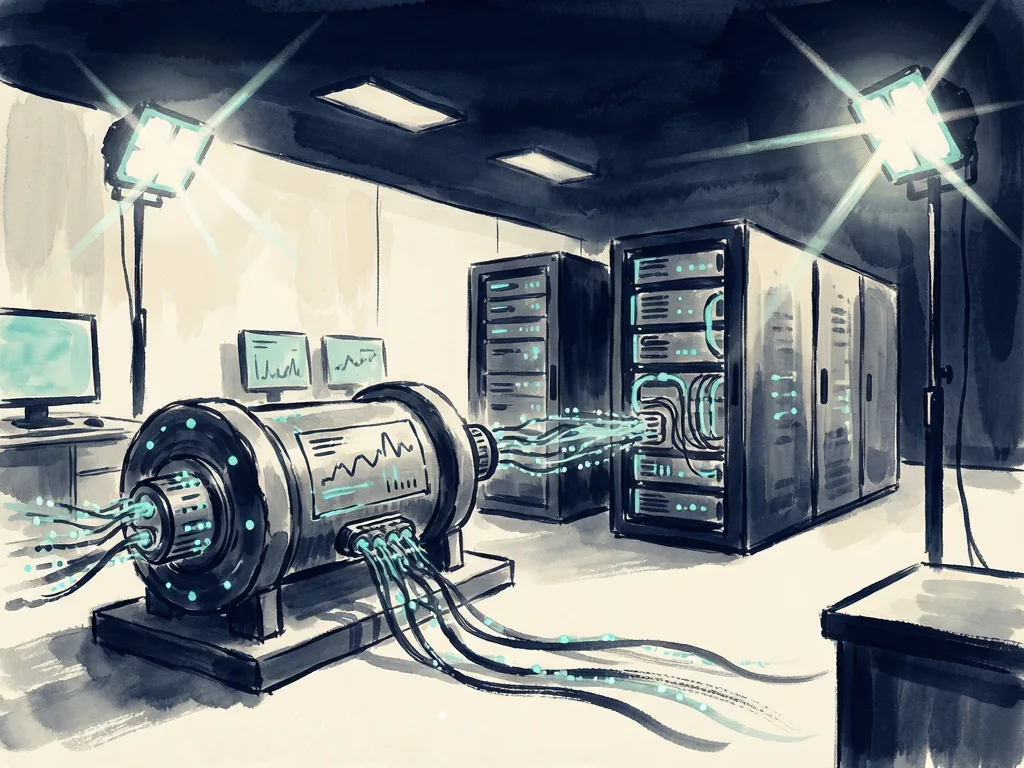
The most concrete new claim is Rubin HPC, a GPU inside the Vera Rubin platform that Nvidia says has more than 50,000 CUDA cores on a single GPU. It is aimed at scientific simulations, engineering applications, and large-scale data processing, rather than being presented only as a card for AI training and inference. Rubin HPC is expected to ship in 2028.
For readers, the value is in the system story. Nvidia is describing a chain of components: a scientific GPU, a rack-scale CPU option, open AI models for research, specialized CUDA-X software libraries, and co-packaged optics switches for very large clusters. Each layer addresses a different bottleneck: compute, data movement, software tools, and networking power and bandwidth.
The main announcements at a glance
| Component | What Nvidia said | Why it matters | Caveat |
|---|---|---|---|
| Rubin HPC GPU | A new GPU in the Vera Rubin platform for high-performance computing, with more than 50,000 CUDA cores, seventh-generation NVLink, sparse-data acceleration, and optimizations for sparse matrix operations, stencil computations, sorting, and reduction operations. | It targets scientific computing workloads rather than only AI training and inference. | Rubin HPC is expected to ship in 2028, and Nvidia did not disclose core counts for regular Rubin GPUs. |
| Vera CPU rack configuration | A rack-scale version of the Vera CPU platform combining 192 Vera CPUs per rack with Quantum-X800 InfiniBand networking and SHARP in-network computing technology, using existing NVL72 rack components including chassis, power distribution, and cooling infrastructure. | Nvidia is moving from a general CPU alternative to a specific high-performance computing configuration. | The source does not provide pricing, customer availability, or independent performance validation. |
| Nemotron for Science | An open collection of AI models, scientific datasets, and post-training tools built on Nemotron 3.5 Super VL, including scientific evaluation tools, an open chemistry dataset, post-training recipes, and integration with CUDA-X libraries. | It supports research agents that can interpret information, generate code, execute computational tools, and assist scientific workflows. | The usefulness of the agents depends on workload design, data quality, and validation. |
| CUDA-X software claims | cuPhoton can reduce astrophysics and telescope data analysis from over a month to eight minutes; cuPotential enables molecular simulations up to 3x faster than the prior generation; Daviator accelerates materials science and quantum-mechanical calculations up to 22x faster; cuSpa supports biological and cellular analysis up to 900x faster than CPUs. | Software acceleration is being positioned as part of the scientific computing value proposition. | The speedups are application-specific claims from the source, not independent benchmarks. |
| Nvidia Photonics | Nvidia highlighted co-packaged optics switches, including a deployment by cloud provider Lambda that connects GB300 NVL72 racks containing more than 10,000 GPUs. | Networking becomes central as AI clusters grow and power and bandwidth constraints increase. | The benefits are described as intended benefits; the source does not give measured deployment results. |
Rubin HPC targets scientific workloads
Rubin HPC is presented as a GPU designed specifically for high-performance computing applications. Nvidia says it has more than 50,000 CUDA cores on a single GPU and includes seventh-generation NVLink for accelerated GPU-to-GPU communication. It also includes sparse-data acceleration and optimizations for sparse matrix operations, stencil computations, sorting, and reduction operations.
Those workload categories matter because scientific and engineering computing often relies on patterns that differ from typical AI training. Sparse matrices, stencil calculations, sorting, and reduction are common in simulations and large-scale data processing. By naming these features, Nvidia is not just selling raw GPU count; it is trying to position Rubin HPC for applications where data movement and specialized compute patterns shape performance.
The main limitation is timing. Rubin HPC is expected to ship in 2028. Buyers evaluating scientific computing hardware today cannot treat it as an immediate option. The source also does not disclose core counts for regular Rubin GPUs, so comparisons across the broader Vera Rubin platform remain incomplete.
Vera CPU moves from general alternative to rack-scale configuration
When Nvidia first introduced its own CPU, it positioned it as an alternative to traditional server processors from Intel and AMD. At Supercomputing '26, Nvidia shifted that framing toward a specific market: high-performance computing.
The new configuration combines 192 Vera CPUs per rack with Quantum-X800 InfiniBand networking and SHARP in-network computing technology. It uses existing NVL72 rack components, including chassis, power distribution, and cooling infrastructure.
This matters because modern scientific and AI systems are not built around single chips alone. Rack-level design can affect how processors, network interfaces, power delivery, and cooling behave together. By reusing NVL72 components, Nvidia is signaling that Vera CPU configurations may fit into an existing system architecture rather than require an entirely separate design.
The source does not provide pricing, power consumption, CPU specifications, or customer deployment details. The announcement is therefore more architectural than complete procurement guidance.
Nemotron for Science tries to make AI agents useful beyond answers
Nemotron is a family of AI models developed by Nvidia, designed to power AI applications, particularly autonomous AI agents. Nemotron for Science is described as a collection of open AI models, scientific datasets, and post-training tools designed to help researchers develop specialized AI agents.
The platform is built on Nemotron 3.5 Super VL and includes scientific evaluation tools, an open chemistry dataset, post-training recipes for specialized scientific applications, and integration with CUDA-X accelerated computing libraries.
The stated objective is to let AI agents do more than answer scientific questions. They can interpret research information, generate code, execute computational tools, and assist with scientific workflows.
That is the key difference from a simple chat model. In research settings, the value comes less from generating text and more from connecting information, tools, and computations. For readers in scientific or engineering fields, the relevant question is whether these agents can be validated, audited, and integrated into existing research pipelines.
CUDA-X claims are application-level acceleration
Nvidia also added capabilities to CUDA-X software libraries, which are designed to accelerate specialized scientific applications.
The source lists four examples:
- cuPhoton for astrophysics and telescope data, where analysis time can be reduced from over a month to eight minutes.
- cuPotential for molecular simulations, up to 3x faster than the prior generation.
- Daviator for materials science and quantum-mechanical calculations, up to 22x faster than the prior generation.
- cuSpa for biological and cellular analysis, up to 900x faster than CPUs.
The broader objective is to make GPU acceleration available throughout scientific workflows, including drug discovery, materials research, astrophysics, and biological research.
These claims are useful as directional indicators, but they are not universal performance guarantees. Speedups depend on workload structure, dataset size, software version, hardware configuration, and whether the application can effectively use sparse-data or GPU-specific features. A 900x comparison with CPUs is meaningful only if the biological or cellular analysis workload is well matched to the GPU and cuSpa implementation.
Networking becomes part of the product story
Nvidia highlighted its Photonics technology, particularly co-packaged optics switches. The source describes this as integrating optical connectivity closer to switching silicon, reducing reliance on conventional electrical connections for high-bandwidth data movement.
The announcement included a deployment by cloud provider Lambda, which is using Nvidia Photonics switches to connect GB300 NVL72 racks containing more than 10,000 GPUs.
The intended benefits described in the source are lower networking power consumption, greater network reliability, improved scalability, and better connectivity for increasingly large GPU clusters.
This is an important development because networking power consumption and bandwidth are becoming major constraints as AI clusters grow. In very large clusters, the network can determine whether GPUs remain productive or spend time waiting for data. For readers evaluating AI or scientific infrastructure, the cluster is no longer just a collection of GPUs; it is a system where optical switches, rack components, cooling, and interconnect design all affect the outcome.
What readers should take from Nvidia's Supercomputing '26 announcements
Nvidia is not announcing a single card. It is describing a complete platform stack: Rubin HPC for scientific GPU workloads, Vera CPU racks for high-performance computing configurations, Nemotron for Science for research agents, CUDA-X for application acceleration, and Photonics for large-cluster networking.
For scientific computing users, the most relevant question is workload fit. If an application uses sparse matrices, stencil computations, sorting, reduction, molecular simulation, materials science calculations, astrophysics data, or biological analysis, Nvidia's announcements point to targeted tools and hardware. If the workload is mostly ordinary AI inference or general-purpose computing, the claims may be less directly useful.
For infrastructure buyers, the most relevant question is integration. Nvidia repeatedly emphasizes rack-level components, existing NVL72 infrastructure, high-bandwidth networking, and power-sensitive interconnect choices. That suggests the company is competing on system delivery, not just chip performance.
Neutral pros and cons
Pros:
- Rubin HPC is explicitly aimed at scientific simulations, engineering applications, and large-scale data processing.
- More than 50,000 CUDA cores and seventh-generation NVLink suggest a focus on high-throughput scientific workloads.
- The Vera CPU rack configuration moves Nvidia beyond general CPU alternatives toward a specific high-performance computing market.
- Nemotron for Science provides open models, datasets, and post-training tools for research agents.
- CUDA-X adds named accelerators for astrophysics, molecular simulations, materials science, quantum-mechanical calculations, and biological analysis.
- Co-packaged optics addresses a real constraint: networking power consumption and bandwidth in very large GPU clusters.
Cons:
- Rubin HPC is not expected to ship until 2028.
- Nvidia did not disclose core counts for regular Rubin GPUs.
- The CUDA-X speedups are application-specific and vendor-stated in the source.
- The source does not provide pricing, measured power efficiency, failure rates, or independent deployment results.
- Co-packaged optics benefits are described as intended benefits, not verified outcomes.
- System-level value depends on whether buyers can integrate the rack, networking, cooling, and software stack into their environment.
Limitations
The article is based only on the provided source material. It does not include Nvidia's full technical documentation, customer benchmarks, pricing, release schedules beyond Rubin HPC's expected 2028 ship date, or independent validation. The performance numbers are Nvidia's claims for specific scientific and computing applications, not universal hardware performance. The Lambda deployment is described in the source as using Nvidia Photonics switches to connect GB300 NVL72 racks with more than 10,000 GPUs, but no deployment metrics such as uptime, measured bandwidth, power savings, or reliability results are given.
FAQ
Is Rubin HPC available now?
No. The source says Rubin HPC is expected to ship in 2028.
What makes Rubin HPC different from other Nvidia GPUs?
It is described as a GPU within the Vera Rubin platform designed specifically for high-performance computing applications, with more than 50,000 CUDA cores, seventh-generation NVLink, sparse-data acceleration, and optimizations for sparse matrix operations, stencil computations, sorting, and reduction operations.
Are the CUDA-X speedups guaranteed?
No. The source presents them as capabilities and claims for specific applications, including up to 3x, up to 22x, and up to 900x comparisons in defined contexts. Real results depend on workload and configuration.
What did Lambda do with Nvidia Photonics?
Lambda is described as using Nvidia Photonics switches to connect GB300 NVL72 racks containing more than 10,000 GPUs.
Is Nvidia only selling GPUs?
No. The source says Nvidia's announcements continue its efforts to expand beyond selling GPUs into supplying complete AI and high-performance computing infrastructure.
Source material: Nvidia's Supercomputing '26 announcements as provided in the source text, including Rubin HPC, Vera CPU, Nemotron for Science, CUDA-X, and Nvidia Photonics.
Last updated: June 22, 2026
Reader notes 0
- No notes yet. Corrections and first-hand test results are welcome.