
Patriots use AI, virtual reality, biometrics and networked facilities to modernize scouting, security, concessions and player development.
The New England Patriots are not only building a football training center; they are turning player preparation into an enterprise technology platform. The stated investment categories include artificial intelligence, virtual reality, biometrics, and Internet of Things systems. The practical signal is that elite sports operations are increasingly shaped by data, networked facilities, personalized workflows, and security infrastructure, not just by coaching plans and physical training.
Factual summary
The Patriots’ new $95 million, 160,000-square-foot New Balance Athletics Center is located in Foxboro, Massachusetts, adjacent to Gillette Stadium. It serves as home base for players and coaches, where they eat, train, practice, meet, game plan, conduct scouting, prepare for the draft, and perform other team functions.
Michael Israel, chief information officer of the Kraft Group, which owns the football team as well as other businesses, says the goal is to provide a seamless, personalized experience that boosts player satisfaction and player performance. There is also a recruitment angle: today’s digital-native college players expect state-of-the-art equipment in a sophisticated technology environment.
Technology solutions provider NWN partnered with the Patriots to build the training facility, which features Cisco wired and wireless networking gear. NWN is also working on a longer-term project to consolidate the Kraft Group’s three-vendor network into an all-Cisco shop. Israel says that decision was not based on dissatisfaction with the other vendors, but on a desire to simplify the network.
Andrew Gilman, chief marketing officer at NWN, says the Patriots are operating like a technology company. The facilities are data driven, the playbooks are digitized, and the environments are connected and networked. Security and artificial intelligence are part of that stack, and everything needs to work together.
Facility features and operational implications
| Feature | What it does | Operational implication |
|---|---|---|
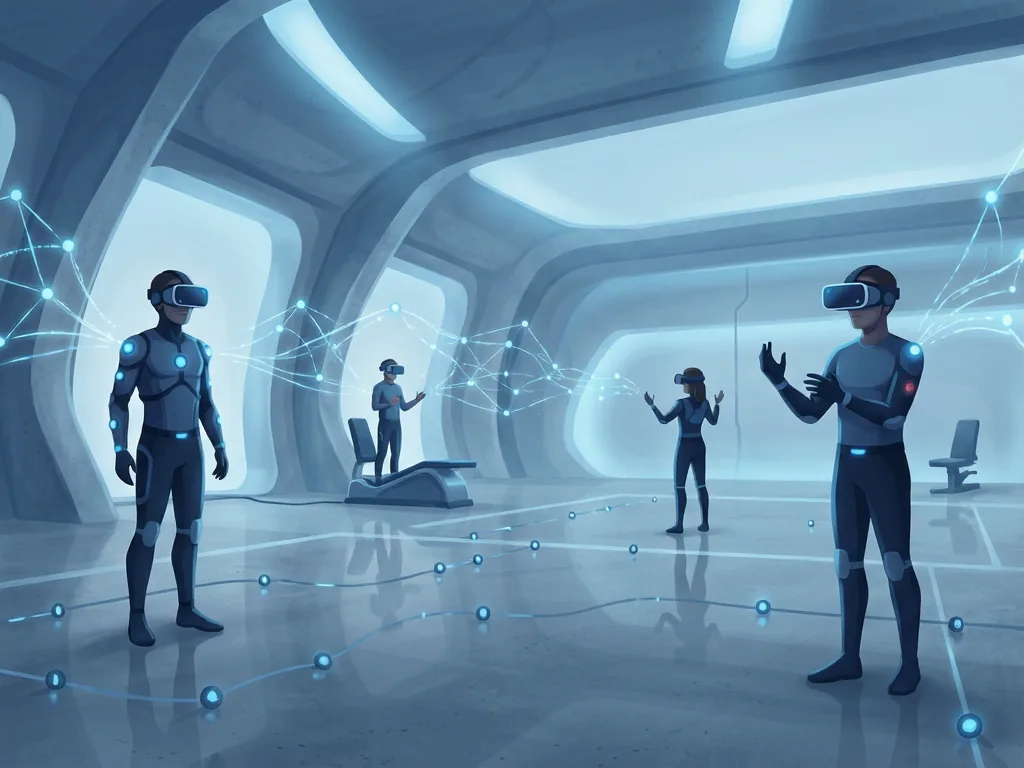
| Virtual reality | A 10,000-square-foot virtual reality room enables coaches to simulate game scenarios in a controlled indoor environment. The room is built to the exact width of a regulation NFL football field, with 20 yards of depth. The projection system surrounds the room so players can see themselves, teammates, and opposing players coming at them. | Coaches can rehearse game planning, review previous games or practices, and prepare players for realistic game experiences without leaving the building. |
| Artificial intelligence | Israel says 10 developers are working on AI applications for the Patriots and other Kraft Group businesses, with about 50 projects in the pipeline. The developers use both OpenAI and Anthropic tools. Projects span security, marketing, and public relations. | The Kraft Group’s broader organization, including manufacturing facilities and an investment arm, supports a larger AI developer team than a standalone NFL franchise might have. |
| Scouting and game film analytics | One key project applies AI analytics to the terabyte of legacy scouting data and game film accumulated over the last 30 years. Coaches can query the database using natural language, such as “show me players with these metrics” or “show me third-down plays that were successful in the past in this specific scenario.” | Historical data becomes more accessible. The advantage depends on whether queries produce accurate, actionable insights rather than just convenient search. |
| Stadium security scanning | An AI-based mobile app lets staffers equipped with iPads scan attendee bags as people approach the stadium to determine whether a bag exceeds strict security-driven size limits. | Bag screening becomes more automated. The facility still relies on correct device use, reliable connectivity, and clear enforcement rules. |
| Concession waste monitoring | Another AI app monitors and tracks food usage at concession stands to reduce waste. | Food operations can be tuned using usage data. The benefit is operational efficiency, not necessarily direct on-field performance. |
| Internet of Things | Every piece of gear connected to the network is discovered, managed, and monitored. Israel says that is the least common denominator when considering how a threat actor might enter the environment. This includes equipment in the 3,700-square-foot hydrotherapy center, the 15,000-square-foot weight room, and systems that monitor everything from water going onto the field to video boards and audio systems. | Connected facilities improve visibility and control, but they also create more network endpoints that must be secured. |
| Dining | Each player works with nutritionists to develop a personalized diet plan. When a player enters the cafeteria, they use a kiosk to select a meal from options designed for their requirements. Intake is monitored and tracked. | Nutrition becomes a measurable operational process. Personalization may improve satisfaction and discipline, but tracking dietary data raises privacy and trust considerations. |
| Collaboration | The training center has 35 rooms equipped with Cisco Webex collaboration systems, plus a 150-seat immersive main meeting room. The wireless infrastructure is Cisco Wi-Fi 7. | Meeting and communication workflows are built around a single networking environment. That can simplify operations if the network performs well under dense, real-time use. |
| Security | Facial recognition technology controls access to the facility. AI-powered video anomaly detection helps security teams identify suspicious or unauthorized activity inside the building. Israel says protecting corporate data from attackers is a high priority. The organization uses multiple backups, including an air-gapped cyber vault. | The facility is treated as both a sports venue and a corporate data environment. Security is not just about stadiums and events; it includes scouting data, player information, and business operations. |
| Scheduling | Israel uses a platform called Teamworks. Players and family members can access it. It provides a detailed schedule showing where players need to be and when. It also keeps family members informed about road trips, including when a player is about to leave and when they are expected back. | Scheduling becomes a shared operational system for players, staff, and families. That may improve coordination, but it also concentrates personal routines into a digital platform. |
Why the Patriots are betting on this model
The facility’s value proposition is integration. The Patriots are not deploying one isolated tool. They are connecting training, scouting, security, nutrition, meetings, scheduling, and stadium operations into a networked environment. Israel’s stated goal is a seamless, personalized experience that improves player satisfaction and performance.
That approach mirrors how technology companies operate: collect data, automate routine decisions, personalize workflows, monitor systems, and secure access. Gilman’s description of the Patriots as operating like a technology company captures the broader shift. The playbooks are digitized. The facilities are data driven. The environments are connected. The question is whether that integration produces a measurable performance advantage.
The Kraft Group structure may matter. Israel says the group’s larger organization, which includes manufacturing and an investment arm, allows him to build a larger AI developer team than a standalone NFL football franchise might have. That gives the Patriots a potential advantage: AI projects can be developed for football operations, while also serving other business areas. The same team of 10 developers and pipeline of 50 projects may not be limited to game planning alone.
The recruitment and player experience angle
The facility also targets a cultural expectation among new players. Digital-native college athletes expect advanced equipment and a sophisticated technology environment. That means a training center is no longer only a place to prepare physically. It is also a hiring tool. A player’s experience may include personalized meals, natural-language scouting queries, virtual reality preparation, connected training equipment, and scheduling visibility for families.
This could influence player satisfaction. If the system feels seamless, players may engage more readily. If it feels intrusive, it may create friction. Tracking food intake, monitoring bag sizes, using facial recognition, and giving family members access to schedules all require trust. The Patriots are betting that the operational benefits outweigh those concerns.
Security and data risks
The most important tension is between convenience and exposure. Israel says every connected piece of gear is discovered, managed, and monitored because network-connected equipment is the least common denominator for potential threat actors. That is a realistic assessment. The more systems are connected, the more places an attacker can attempt to enter.
The Patriots use facial recognition for access control, AI-powered video anomaly detection for suspicious activity, multiple backups, and an air-gapped cyber vault. These measures suggest a mature security posture. But the facility still depends on accurate detection, reliable network operations, and disciplined use by staff and players.
AI-powered security tools can reduce manual screening, but they can also create new failure modes. A bag-scanning app must work correctly at stadium entrances. Video anomaly detection must distinguish real threats from normal behavior. Network-connected hydrotherapy, weight room, field watering, video board, and audio systems must be monitored without disrupting daily operations. The security architecture is essential, but it is only as strong as its implementation.
Performance uncertainty remains
The Patriots’ bet is that technology will improve preparation. The source does not provide direct performance data proving that the new facility has already changed game outcomes. That uncertainty is important. A 10,000-square-foot virtual reality room can simulate game scenarios. A terabyte of legacy scouting data can be queried with natural language. But better tools do not automatically produce better decisions.
The value depends on several conditions:
- Coaches must trust the outputs and integrate them into actual game planning.
- Players must accept monitoring of nutrition, schedules, and personal routines.
- Security systems must detect real threats without creating excessive false positives.
- Network consolidation must simplify operations without introducing vendor lock-in or single points of failure.
- AI developers must turn projects from the 50-item pipeline into usable tools rather than experiments.
The Patriots appear to have the scale to test these systems. The Kraft Group owns other businesses, and the AI team supports both football and broader operations. That may reduce the cost of innovation. But the football-specific payoff still depends on whether these systems improve scouting, preparation, communication, and recovery in ways that matter on the field.
Pros and cons
Pros
- Creates a unified technology environment across training, scouting, security, dining, meetings, and scheduling.
- Gives coaches access to legacy game film and scouting data through natural-language queries.
- Supports realistic game preparation through a virtual reality room built to regulation field width and 20 yards of depth.
- May improve recruitment by meeting digital-native players’ expectations for advanced facilities.
- Strengthens facility security through facial recognition, video anomaly detection, network monitoring, backups, and an air-gapped cyber vault.
- Uses the Kraft Group’s broader business footprint to support a larger AI developer team than a standalone NFL franchise might have.
Cons
- Increases the attack surface because every connected device must be discovered, managed, and monitored.
- Relies on integration across Cisco networking, NWN services, OpenAI tools, Anthropic tools, Teamworks, Webex, and custom AI applications.
- Raises privacy and trust questions around facial recognition, food intake tracking, family-accessible scheduling, and AI monitoring.
- Does not prove that technology investments directly translate into better game results.
- Network consolidation and vendor choices may simplify management but also create dependence on fewer suppliers.
- AI projects may be difficult to evaluate because their value depends on data quality, user adoption, and real operational use.
Limitations
The article is based only on the facts provided in the source. It does not include independent performance metrics, player satisfaction data, incident outcomes, or comparative benchmarks against other NFL facilities. The Patriots’ stated goal is to boost player satisfaction and performance, but the source does not quantify whether the new facility has already achieved that goal.
FAQ
What is the Patriots’ main technology goal?
The stated goal is to provide a seamless, personalized experience that boosts player satisfaction and player performance. The facility also supports recruitment by offering a sophisticated technology environment.
How large is the new training center?
The New Balance Athletics Center is $95 million and 160,000 square feet. It includes a 10,000-square-foot virtual reality room, a 3,700-square-foot hydrotherapy center, a 15,000-square-foot weight room, 35 collaboration rooms with Cisco Webex systems, and a 150-seat immersive main meeting room.
What role does artificial intelligence play?
AI is used in scouting and game film analysis, bag scanning, concession waste tracking, video anomaly detection, and broader business projects. The Patriots’ technology team has 10 developers and about 50 AI projects in the pipeline.
Why is security emphasized?
Because every connected piece of equipment creates a potential entry point for attackers. The facility uses network monitoring, facial recognition, AI-powered video anomaly detection, multiple backups, and an air-gapped cyber vault.
Sources and official details
- The New England Patriots and Kraft Group, through Michael Israel, chief information officer.
- NWN, through Andrew Gilman, chief marketing officer.
- Facility details: New Balance Athletics Center, Foxboro, Massachusetts, adjacent to Gillette Stadium.
- Technology partners and systems named in the source: Cisco wired and wireless networking, Cisco Webex, Cisco Wi-Fi 7, OpenAI, Anthropic, Teamworks, iPads, facial recognition, AI-powered video anomaly detection, and an air-gapped cyber vault.
Last updated: no date provided in the source text.
Reader notes 0
- No notes yet. Corrections and first-hand test results are welcome.