
Nvidia's CEO reversal restores stability but deepens concerns about AI vendor concentration, board independence, and enterprise risk exposure.
The Nvidia board of directors reversed its own position on Monday, reinstating Jensen Huang as CEO after saying last week that he was out for good. The decision does not remove the enterprise problem it exposed. It stabilizes short-term leadership at a company whose chips, capital and ecosystem relationships sit at the center of artificial intelligence infrastructure, while making it harder for buyers to assume that board oversight will always act as an independent check on the chief executive.
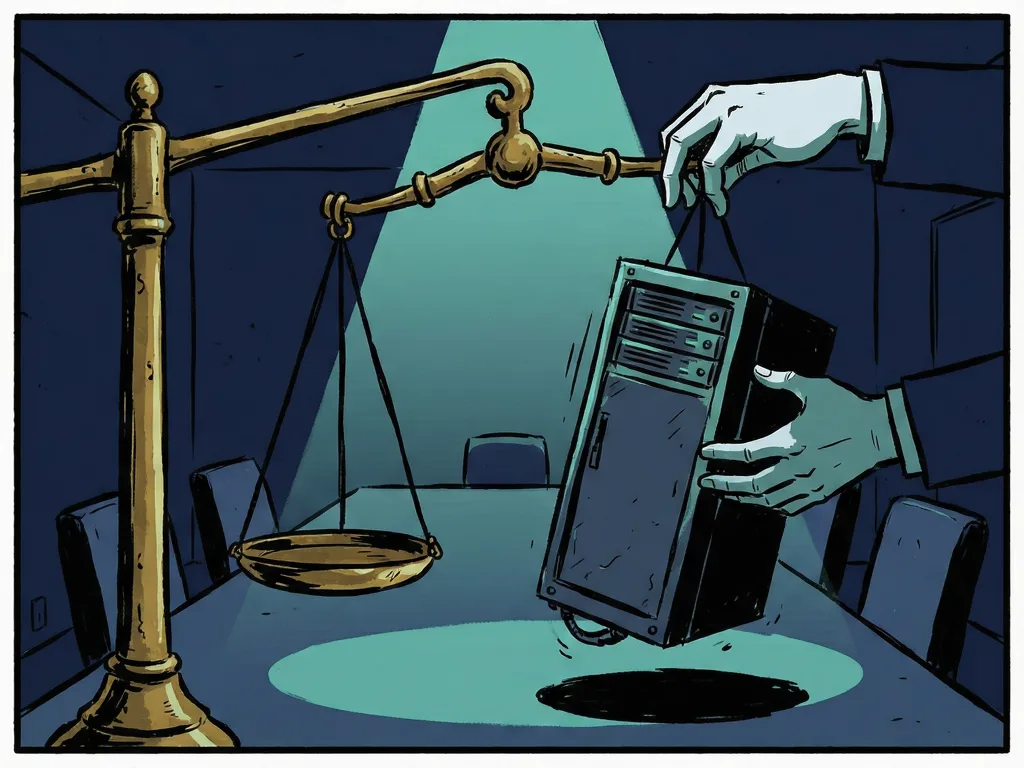
The move raises two linked questions: whether companies can manage overreliance on one AI vendor, and whether boards can still effectively manage their CEOs when political and shareholder pressure appears to influence the outcome.
What changed after the last eleven days
Nvidia’s statement says the board received input from senior levels of the United States government and, based on that input, is confident that Mr. Huang’s reinstatement poses no national security risk. The source article also identifies direct involvement by US President Donald Trump as a concern raised by the statement. Nvidia did not respond to a request for further details.
The statement adds that the board had previously formed a committee comprised solely of independent directors to investigate recent reporting that Mr. Huang has been the target of a foreign intelligence effort. That committee retained independent counsel, and the board reiterated that the investigation will proceed to conclusion. Mr. Huang fully supports the investigation and is committed to cooperating with it.
Frank Dickson, principal analyst at Dickson Research, said the statement made a governance point plainly: Nvidia said the quiet part out loud. “Its board answers to more than just its stockholders,” he said. “When a board says its decision rests partly on input from senior levels of the United States government, Washington has a seat at the table.”
Dickson also warned that the word “input” may understate the relationship. “When the input comes from the government that writes your export rules, the line between input and pressure gets thin,” he said.
Why the interim CEO created concern
The brief tenure of Nvidia acting CEO Colette Kress had raised concerns that she might revisit various Nvidia investments in other AI companies. During a November 17 earnings call, Kress signaled that she might pull back, or at least reevaluate, some of those investments, especially in terms of financing data centers.
“We remain thoughtful in how we participate and disciplined in how we commit capital,” Kress said. “We are proud of the role that we have played so far in supporting the ecosystem. As the market matures and additional sources of capital become available, we are rigorously evaluating future investments, commitments and guarantees.”
She added that Nvidia under her leadership would be “taking a very strong look” at the types of companies it would want to help through financing, because “a lot of things have changed over this last quarter,” and noted that Nvidia would do “a lot of work to understand if those are the right types of investments that we need to make.”
Dickson said Huang’s return could deliver reassurance that no meaningful changes are imminent. “The larger AI ecosystem should feel the return most,” he said. “Huang has been the bank of Jensen, financing the AI companies that buy Nvidia’s chips.” He pointed to Nvidia’s balance sheet: non-marketable securities, its stakes in private companies, grew from about $22 billion in January to about $66 billion in late October.
But the board statement also raised the possibility that the reinstatement might be reversed. Dickson said Huang’s return gives chief information officers back the Nvidia they planned around, but does not necessarily give them back certainty. “That is a Sword of Damocles hanging over the CEO of the company at the center of enterprise AI. A second boomerang is possible,” he said.
Government input, board independence and the unanswered conduct questions
Noah Kenney, principal consultant at Digital 520, said the government involvement raised difficult questions. In his view, senior US officials gave the board enough comfort on the national security question to reinstate Huang before the investigation finished. That, he said, means the government played a direct role in deciding who runs one of the enterprise market’s most important suppliers, and chief information officers should expect Nvidia’s leadership and product availability to remain closely tied to US policy.
Sanchit Vir Gogia, chief analyst at Greyhound Research, said part of the pressure that reversed the CEO decision came from the state. “That gives the decision weight and takes away some of its independence,” he said. “Procurement leaders who count on board oversight as a backstop have reason to feel less reassured. Boards of critical suppliers must publish the reasons for leadership decisions, including the ones they reverse.”
Brian Jackson, a principal research director at Infotech, was more blunt. “The Nvidia board’s decision to reinstate Jensen Huang as CEO looks like a cave-in to external pressure rather than doing what’s truly best in the long-term interests of the company,” he said. He noted a contradiction: the board said discussions with the US government assured them there was no national security risk, while also saying it would continue investigating. “So which one is it?” Jackson asked. “Is the doubt about being compromised by a foreign intelligence effort cleared or is it under investigation?”
Jackson also said the statement did not acknowledge the alleged breach of conduct involving Huang’s reported affairs with two Nvidia employees. “Their silence risks leaving employees uncertain about how seriously the Board takes the boundaries between personal and professional relationships,” he said.
The concentration risk is the main enterprise lesson
The biggest concern expressed by consultants and analysts was that the decision highlights the extreme enterprise information technology risks associated with overreliance on a handful of key AI companies.
Pam Baker, AI consultant at consulting firm Human Interrupted, said the episode adds several items to customers’ to-do lists. For chief information officers buying from these companies, she said, a supplier that can lose hundreds of billions of dollars in a morning because of one person is a supply-chain risk. Her advice: diversify, tighten contracts, and add governance to vendor due diligence. When boards cannot check the CEO, she said, the chief information officer’s controls over access, records and data may be the last safeguards still working.
Kenney agreed that enterprises already have a vendor-concentration problem with Nvidia. He said the last eleven days showed that some of that exposure also sits with one person. Nvidia’s technology continued to work, in his view, but leadership, market confidence and government relationships changed quickly because of Huang’s conduct. He said the board had indicated it would not bring Huang back but reversed course after shareholder and government pressure, which highlights how critical a role Huang holds and adds key-person risk to vendor risks that chief information officers must consider.
Dickson added that Monday’s reversal should remind buyers to treat even the largest AI vendors as they would the smallest startup. He said buyers should ask every supplier the question they used to save for startups: “What happens if the founder walks out the door tomorrow?” He also said keep AI workloads portable enough that a leadership shock at one vendor is a headline, not an outage.
Stephanie Balaouras, vice president and group research director at Forrester, said the announcement changes the leadership picture, but not the strategic advice. “The concentration risk still remains what it is,” she said. “Although Huang’s reinstatement may calm immediate concerns around Nvidia’s leadership, it should not reverse enterprise efforts to build alternatives into their AI infrastructure strategy. Restoring leadership does not mean restoring confidence in resilience. Leaders need to keep confronting AI concentration risk.”
What buyers can and cannot conclude
| Issue | What the source supports | What remains uncertain |
|---|---|---|
| Leadership continuity | The board reinstated Jensen Huang as CEO on Monday. | Whether the reinstatement will survive the independent committee investigation. |
| National security | The board says senior-level US government input gave confidence that reinstatement poses no national security risk. | The content of that input and how much weight it carried in the decision. |
| AI ecosystem financing | Huang’s return may reassure companies that have relied on Nvidia’s private-company investments. | Whether any investment review started under Colette Kress will be paused, reversed or only delayed. |
| Vendor concentration | Analysts say Nvidia remains a central supplier and key-person risk has increased. | Whether buyers can actually diversify quickly enough to reduce exposure. |
| Employee governance | Analysts note the statement did not address reported affairs with two Nvidia employees. | How the board will handle conduct allegations and boundaries between personal and professional relationships. |
Limits of the available facts
The source does not provide a timeline for the independent committee’s investigation, details of the senior-level US government input, or Nvidia’s response to requests for further information. It also does not confirm whether the alleged breach of conduct involving Huang’s reported affairs with two Nvidia employees is part of the investigation. No official product specifications were included in the source material. Because the board has said the investigation will proceed to conclusion, the current leadership outcome is best read as conditional, not final.
Frequently asked questions
Did the board say it was still investigating Huang?
Yes. The statement says the committee comprised solely of independent directors will continue its investigation, with independent counsel assisting.
Did Nvidia explain the government input?
No. The statement says the board received input from senior levels of the United States government, but the source says Nvidia did not respond to a request for further details.
Does the reinstatement reduce enterprise risk?
It may reduce short-term uncertainty about leadership and financing, but analysts say it also highlights vendor concentration, key-person risk, and governance questions.
Sources: Nvidia board statement as quoted in the source article; November 17 earnings call remarks by Colette Kress; analyst commentary from Frank Dickson of Dickson Research, Noah Kenney of Digital 520, Sanchit Vir Gogia of Greyhound Research, Brian Jackson of Infotech, Pam Baker of Human Interrupted, and Stephanie Balaouras of Forrester. This article originally appeared on CIO.com.
Last updated: Monday, the day the source article says Nvidia announced the reinstatement.
Reader notes 0
- No notes yet. Corrections and first-hand test results are welcome.