
A redaction proxy protects AI prompts by replacing secrets before sending and restoring responses, improving security and data sovereignty.
Engineers often manually clean logs before pasting them into AI assistants. This reveals a structural problem: frontier models often run outside user infrastructure, frequently under another jurisdiction, and prompts may contain operational data such as IP addresses, passwords, or customer identifiers. The source concludes manual cleaning is not scalable. A better pattern is a redaction proxy between the AI tool and model provider, intercepting requests before leaving and restoring values before results are used.
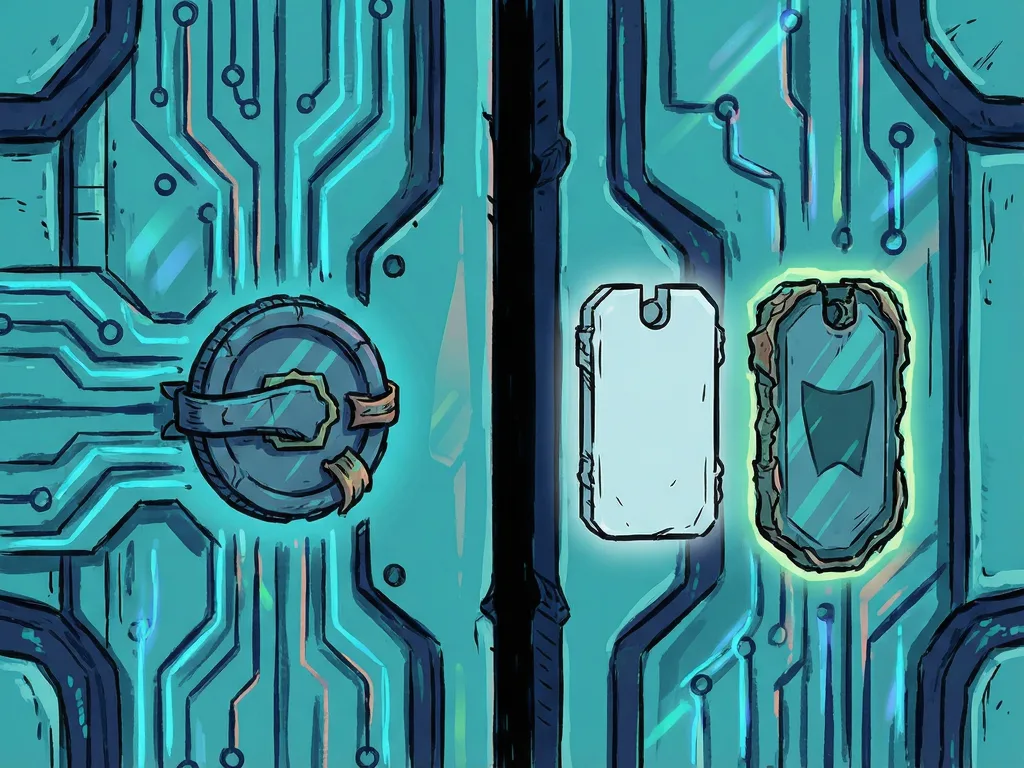
The source describes OVHcloud's Pookie, a redaction proxy built for OVHcloud's rules. Redaction addresses security and sovereignty: a secret that never leaves the controlled path cannot be logged, leaked, or legally requested outside that path.
The Security and Sovereignty Question Behind AI Prompts
Prompting third-party models raises security and sovereignty questions.
Security asks whether secrets can leak, be logged, or be retained long enough to be cracked. Frontier models are among the most capable AI models available today and run outside user infrastructure, often under another jurisdiction, so coding agents may send operational text remotely without the same visibility, controls, or legal environment as inside the company.
Sovereignty asks who can legally reach data after it leaves. Data processed by a provider outside the jurisdiction falls under that provider's laws, and some allow authority access. For European organisations bound by the General Data Protection Regulation and the Network and Information Security Directive 2, known as NIS2, this is both compliance and technical.
OWASP ranks sensitive information disclosure second among top LLM application security risks and recommends sanitising values before they reach the model. Redaction fits: if values are replaced before prompts leave, the model never sees the original secrets. The source links this to OVHcloud's data-sovereignty commitment: a value that never leaves cannot be reached.
Why Manual Redaction Falls Short
Before joining OVHcloud, the author worked on a highly secured offline site where each export passed through an administrator, who ran a cleaning script and reviewed results line by line.
Years later, at a different company and for a different reason, the list of data that must never leave was almost identical: hostnames, IP addresses, passwords and tokens, encrypted secrets, and customer identifiers.
The first response was a small find-and-replace script run by hand before sending anything to an AI tool. The source identifies four flaws: manual, so engineers forget; incomplete, because each secret type needs a rule and new formats appear; one-way, because models answer with <REDACTED> and users restore values; inconsistent, because two servers can both become <PRIVATE_IP>, making answers less useful or misleading.
As colleagues shared scripts, results drifted. The source says the next step was to remove humans from the loop: controls must live in the request path, not in memory.
What a Redaction Proxy Changes
A proxy sits between a client and server and relays traffic. In Pookie, the client is the AI tool and the server is the model provider, so every request and response passes through the proxy.
This changes enforcement: instead of asking engineers to clean prompts, the system cleans traffic. Several open source and commercial tools already occupy this position; Pookie was built specifically for OVHcloud's rules. Its name is French slang for a "snitch," but the source jokes that it keeps its mouth shut: observe traffic, apply rules, and do not leak protected content.
The design redacts on the way out and restores on the way in. The model sees a sanitised prompt, while the local client can receive responses where placeholders are mapped back to real values.
In the source scenario, an agent reads a welcome note for a new server; ordinary operational text can contain the listed secret categories, so a proxy makes sanitisation normal rather than optional.
Comparison: Manual Cleaning and Proxy Redaction
| Dimension | Manual Redaction | Redaction-Proxy Design |
|---|---|---|
| Enforcement | Engineer memory | Traffic between AI tool and provider |
| Coverage | Per-secret rules | Central request-path rules |
| Reversibility | User restores placeholders | Redact out, restore in |
| Context preservation | Same <PRIVATE_IP> can merge entities | Must preserve distinguishability; details unspecified |
| Team consistency | Scripts drift | Shared path reduces drift |
| Main limitation | Does not scale | New control point needing bypass/monitoring |
This table is a control, not product, comparison; it supports a proxy removing humans from routine sanitisation, but does not prove any one proxy implementation solves every secret-detection, restoration, or consistency problem.
Risks, Limits, and Unresolved Questions
The proxy pattern is stronger than manual cleaning, but not automatically complete.
Coverage: listed categories are common, but operational data can appear in unexpected formats. If a secret type is not recognised, it may still leave.
Bypass: if engineers can send prompts directly to the provider, the control fails. The proxy must be the normal path, not an optional tool.
Placeholder design: if every secret becomes the same generic label, the model may lose entity distinctions. The source does not describe how Pookie handles this, so it remains unresolved.
Restoration: redaction is useful only if local clients can understand answers. Incorrect placeholder restoration may be confusing or dangerous when copied into operational systems.
Legal and sovereignty exposure: a proxy reduces sensitive data leaving, but does not prove provider logging, retention, subprocessor, or legal-access arrangements are acceptable. Those require organisational review.
What Readers Can Borrow
The source suggests a sequence for teams that cannot rely on frontier models being safe by default.
Start by listing data that must never leave, using the baseline list above.
Then choose a control point: manual scripts depend on memory; proxies are stronger because traffic passes through them.
Then design reversible redaction. Models answer with <REDACTED>; users restore values. A proxy should handle restoration.
Then preserve context: the <PRIVATE_IP> example shows redaction can destroy meaning if entities become indistinguishable. Test whether schemes let models compare servers, hosts, users, or customer records without exposing real values.
Then monitor drift. Shared scripts produced different results. A central proxy reduces drift only if rules are maintained, versioned, and reviewed.
This is not a security guarantee. It makes safety controls less dependent on individual engineers remembering to clean logs.
FAQ
Why is manual cleaning not enough?
It depends on human memory and individual scripts. The source says it is incomplete, one-way, inconsistent, and difficult to keep uniform.
What does a redaction proxy actually do?
It sits between the AI tool and model provider, intercepts requests, replaces sensitive values before they leave, and can restore values on the way back, according to the source's pattern.
Does redaction eliminate all risk?
No. It reduces the chance sensitive values reach the model, but the source does not claim it eliminates every security, compliance, logging, or provider-access concern.
Why does the source mention OWASP?
OWASP shows sensitive information disclosure is a recognised LLM application risk: ranked second among top security risks, with recommended sanitising values before they reach the model.
Why are jurisdiction and sovereignty mentioned?
Frontier models often run outside user infrastructure and may fall under another provider's legal system. Data processed outside a jurisdiction can be subject to that provider's laws, including authority access.
Sources and Update Date
Named sources: OVHcloud; the author's description of Pookie; frontier AI models; the Open Worldwide Application Security Project ranking; the General Data Protection Regulation; the Network and Information Security Directive 2.
No product specifications, benchmarks, pricing, or operational guarantees are provided in the source material.
Last updated: June 22, 2026.
Reader notes 0
- No notes yet. Corrections and first-hand test results are welcome.