
Palo Alto Networks' $4.5 billion all-stock Applied Compute deal expands security into AI models, compute, risk control, and sovereignty claims.
Palo Alto Networks is trying to move from protecting AI systems to owning part of the AI stack. The company’s agreement to acquire Applied Compute in an all-stock deal valued at $4.5 billion is not only a talent and platform purchase. It is a strategic bet that enterprises will want a single supplier that can help them train, deploy, secure and possibly host open-weight AI models.
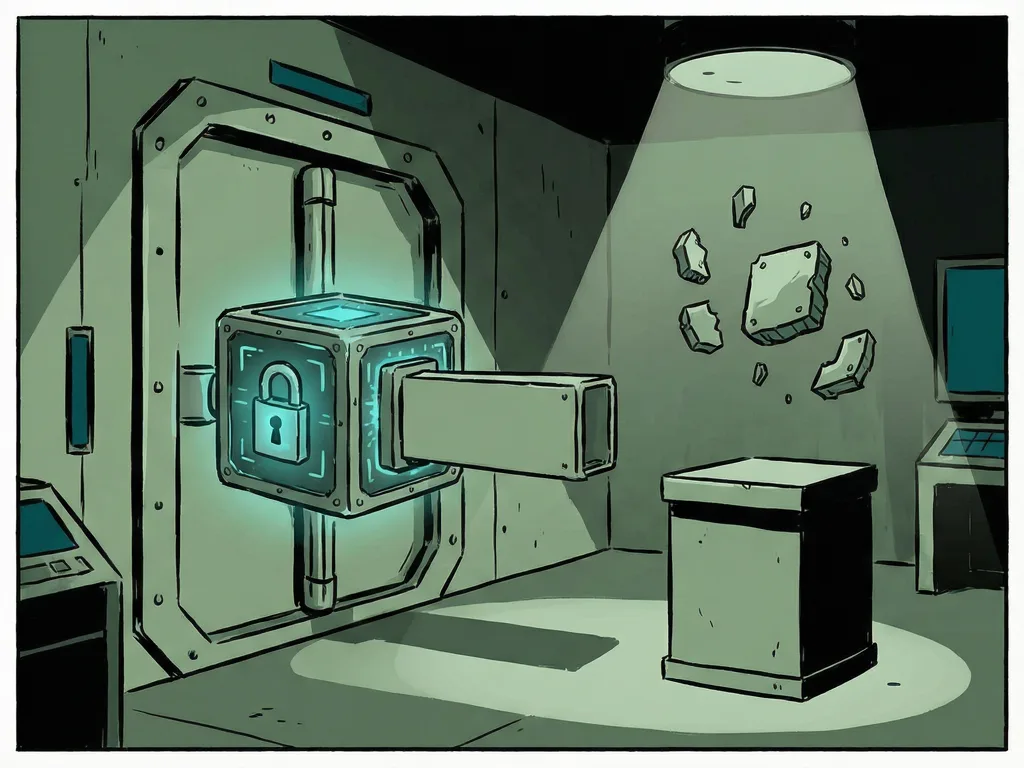
The core judgment is that Palo Alto Networks is expanding beyond security software into AI model services, compute and sovereignty claims. The upside is tighter control over AI risk. The downside is greater vendor concentration, unresolved jurisdictional questions and a capex-heavy plan that depends on GPUs, cloud partners and future enterprise demand.
What the deal says
Palo Alto Networks described Applied Compute as a leading platform for post-training and inference of open-weight AI models. The transaction was announced alongside Palo Alto Networks’ fiscal first quarter 2027 results.
The company said the acquisition will bring Applied Compute’s platform and AI research team to Palo Alto Networks to help enterprises adopt AI securely. It framed the fit broadly: customers may choose open-weight models, closed frontier models, or both. Applied Compute will continue to serve AI-native companies, digital natives and large enterprises.
The deal is expected to close in Palo Alto Networks’ fiscal third quarter of 2027, a period the company said runs from February to April. Applied Compute co-founder and CEO Yash Patil will become Palo Alto Networks’ co-chief AI officer. The startup’s research team will help build AI models across the company’s offerings.
Why security vendors care about model weights
Palo Alto Networks chairman and CEO Nikesh Arora said on the earnings call that the company will not only build AI into its own security products. It also wants to help train and serve secure sovereign implementations of open-weight models for enterprises.
His argument is that open-weight models are becoming more important. Arora said open-weight model implementations had grown from under 5% of token traffic to more than 60% over the past year. He did not say where that figure came from, which matters because the number is being used to justify a major strategic shift.
The deeper logic is control. Arora said deterministic security controls cannot anticipate every scenario that an AI agent might conduct. Enterprises building AI applications, he said, will have to train a supervisory AI model at the same time. His point was blunt: Palo Alto Networks cannot secure models it has no part in building, and it cannot intercept and understand somebody else’s application.
That reasoning supports the acquisition. If the company helps train or serve the model, it may gain more visibility into how the system behaves. It may also create a stronger reason for customers to keep AI workloads close to Palo Alto Networks’ security platform.
Analyst pushback: runtime risk and conflict of duty
Sanchit Vir Gogia, chief analyst at Greyhound Research, said Arora has a point because a generic filter cannot know how a particular application is meant to behave. But he also warned that most failures in AI applications happen at runtime, through prompts, tools and permissions, regardless of who trained the model.
That distinction is important. A model provider may know the model’s architecture and training choices. A security vendor may know network controls, identity signals and runtime telemetry. The real risk often appears where those layers meet: when a model is allowed to call a tool, access data, or act inside a workflow.
Gogia noted that Palo Alto Networks has sold model-agnostic protection through Prisma AIRS since 2025. That product line matters because the company already had a security pitch that did not require owning the model. The acquisition suggests Palo Alto Networks believes model-level involvement may be necessary, or at least commercially valuable.
Gogia’s sharpest criticism was about separation of duties. He said a supervisor trained by the same hands as the system it supervises is a colleague, not a check. His advice to chief information officers was to make sure someone other than the trainer tests the result.
The compute plan: GPUs, megawatts and cloud partners
To train and host models, Palo Alto Networks plans to build its own compute capacity. CFO Dipak Golechha said on the earnings call that spending will mostly go to GPUs and servers, with a smaller share for the facilities that house them. The company will continue to source capacity from its cloud partners and add dedicated capacity over time.
Arora said the company aims for more than 100 megawatts of compute in the next three to five years. That target places the deal in a more expensive category than a normal software acquisition. It is not just about code and people. It is about energy, hardware access, hosting location and long-term operating commitments.
Gogia argued that Palo Alto Networks has sovereignty credentials for security data, including customer-held keys and a European Cortex service governed by Deutsche Telekom. But he said none of that yet extends to GPUs. A US-headquartered operator, he noted, faces the same jurisdictional questions as the hyperscalers from which it rents capacity.
His warning was direct: a sovereign hosting offer with no named region, operator or date is a promise looking for an address. He said compliance officers should ask Palo Alto Networks for a region list, the operator, and a dated certification plan.
A larger stack, and a larger single point of failure
The Applied Compute deal follows Palo Alto Networks’ $25 billion purchase of CyberArk, which added identity security to its platform. Gogia said Applied Compute would now add the models themselves to a supplier already at the center of many customers’ firewalls, security operations centers and identity controls.
That creates a trade-off. One team watching both the model and the telemetry can spot trouble sooner. It may reduce gaps between AI behavior and security enforcement. But the same concentration means a single fault, breach or pricing dispute could land on the protection and the protected together.
Arora said the training and inference business could eventually exceed Palo Alto Networks’ core market. “This could be bigger than what we do today,” he said. If that is true, the acquisition is a platform expansion, not a defensive move. If it is wrong, the company may have taken on model-building, hosting and compute risk without enough customer demand to justify it.
What enterprise buyers should check before signing up
Gogia said chief information officers should get a costed exit in writing before any model work moves across. That is practical advice. The deal is expected to close months from announcement, and customers may need to decide before integration changes the commercial or technical picture.
Applied Compute customers should use the months before closing to secure several protections, Gogia said:
- ownership of trained weights in an exportable format;
- no training on their data without consent;
- a right to exit on change of control;
- price protection that survives bundling.
He added that terms are cheapest to win while the suitor is still courting. In other words, buyers have more negotiating leverage before the acquisition closes than after it becomes part of Palo Alto Networks’ platform.
Deal facts and open questions
| Item | What is known | What remains uncertain |
|---|---|---|
| Valuation | All-stock deal valued at $4.5 billion | Final shareholder approval and integration cost |
| Timing | Expected close in fiscal third quarter of 2027 | Whether the closing window changes |
| Leadership | Yash Patil becomes co-chief AI officer | How research and security teams will be organized |
| Strategic goal | Help enterprises adopt AI securely with open-weight and closed frontier models | How much revenue will come from model services |
| Token traffic | Arora said open-weight grew from under 5% to more than 60% of token traffic over past year | Source of the figure |
| Compute | Spending mostly on GPUs and servers; target of more than 100 megawatts in three to five years | Cloud partner mix, facility locations and capex totals |
| Sovereignty | Palo Alto Networks claims security data sovereignty credentials | No named GPU regions, operator or certification date |
| Risk | Added models to a stack already including firewalls, security operations centers and identity controls | Concentration risk if one vendor controls too much |
Neutral pros and cons
Pros:
- Palo Alto Networks gains a post-training and inference platform for open-weight models.
- The deal brings an AI research team into a security company that wants to serve enterprise AI adoption.
- Model involvement could improve visibility into AI behavior that generic security controls may miss.
- Customers wanting secure AI adoption may prefer a vendor that combines security, identity and model services.
- The company is positioning around open-weight models at a time when demand for sovereign and controllable AI is rising.
Cons:
- Palo Alto Networks now takes on model training, inference and compute responsibilities.
- The more than 100 megawatts target implies significant infrastructure spending.
- Sovereignty claims are not yet tied to named GPU regions, operators or dated certification plans.
- Enterprises may worry about concentration if one vendor controls protection and the protected system.
- The separation-of-duties concern is real: a model builder supervising its own model is not independent assurance.
- The open-weight token traffic figure was not sourced in the reported statement.
Limitations
The analysis rests on Palo Alto Networks’ acquisition statement, earnings call remarks and commentary from Greyhound Research as reported by CSO. There is no independent verification in the source text for the open-weight token traffic figure. The company has not provided named regions, GPU operators or certification dates for sovereign compute. Deal economics beyond the $4.5 billion all-stock value are also not detailed in the source.
Sources
Source: Palo Alto Networks statement and earnings call, as reported by CSO.
Last updated: 2026-06-22
Reader notes 0
- No notes yet. Corrections and first-hand test results are welcome.