
Agentic AI adapts plans to achieve goals, while traditional AI performs fixed tasks; compare autonomy, oversight, reliability, and cost.
Agentic AI and traditional AI are not competing versions of the same tool. They answer different questions. Traditional AI asks, "What is the right output for this input?" Agentic AI asks, "What should I do next to reach this objective?" Understanding that split matters for anyone deciding how much autonomy to grant a system, how to budget for it, and where to place human checkpoints.
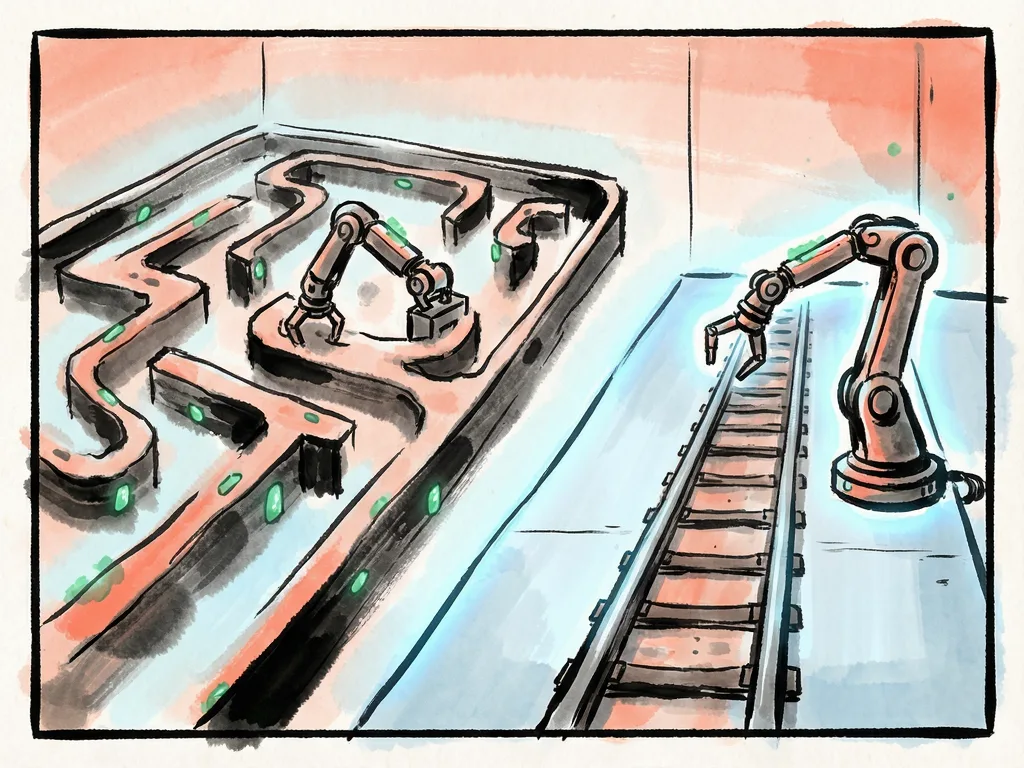
This article breaks down the differences across adaptation, tool use, human oversight, reliability, and cost, using concrete examples and Hostinger's own support data to show how the trade-offs play out in production.
Defining the two systems
Agentic AI pursues an objective through multiple actions, deciding what to do next based on the information and results it receives along the way. It operates within the tools, permissions, and rules it has been given: it breaks a goal into steps, uses connected systems to carry them out, evaluates what happened, and adjusts subsequent actions when necessary.
Traditional AI refers to rule-based systems and task-specific machine learning models designed to perform a predefined function—classifying information, making predictions, generating scores, or recommending actions. Rule-based systems follow predefined logic, while machine learning models learn patterns from data and apply them to new inputs. Unlike ordinary automation, which runs a fixed sequence of steps, traditional AI makes a judgment about its input, such as assigning a ticket category or a fraud risk score.
The distinction between agentic AI and generative AI is separate and often blurred. Generative AI produces content. Agentic AI determines and carries out the actions needed to pursue a goal—even when an agent uses generative AI as part of its work. The dividing line is content generation versus task execution.
The comparison at a glance
| Dimension | Traditional AI | Agentic AI |
|---|---|---|
| Purpose | Performs a defined task | Works toward an objective that may require multiple tasks |
| Autonomy | Operates within a predefined function | Selects and performs permitted actions based on context |
| Planning | Follows a fixed process to return its specified output | Determines and revises a sequence of actions |
| Adaptation | Adjusts outputs based on rules, its model, or new input | Evaluates intermediate results and changes subsequent actions |
| Tool use | May supply an output to software or another workflow | Uses connected tools, services, and models to advance the task |
| Human involvement | Humans define the task and decide how to use its output | Humans set goals, access, boundaries, approvals, and escalation rules |
| Typical outputs | Prediction, classification, score, recommendation, or optimized result | Completed workflow, performed actions, escalation, or goal-oriented result |
| Evaluation | Measured against a defined output metric | Requires evaluation of outcomes, actions, failures, and policy compliance |
| Best suited for | Narrow, repeatable analytical or decision-support tasks | Variable, multi-step work where the next action depends on earlier results |
Adaptation: the output changes vs. the plan changes
The cleanest way to frame the difference: when conditions change, traditional AI changes the output but keeps the assigned task; agentic AI changes the plan but keeps the objective.
A traditional model can respond to new data without altering what it does. New information may produce a different forecast, classification, or recommendation, but the system still works toward the same predefined output. An agent, by contrast, can revise the route to an outcome. When an action fails or produces an unexpected result, it can reassess and choose another permitted step.
Consider an ecommerce company forecasting holiday demand. With traditional AI, early sales come in higher than expected, the model incorporates the new data, and it raises its forecast from 5,000 to 7,000 units. The task—forecasting—never changed. With agentic AI, the same company needs 5,000 units in stock. The agent initially plans to order through the usual supplier. Early sales push the estimate to 7,000 units, but the usual supplier cannot deliver the additional stock in time. The agent then checks approved suppliers, splits the order between two that can meet the deadline, and updates the replenishment schedule. The goal stayed fixed; the path changed.
Tool use: who decides which systems get touched
With traditional AI, a predefined process determines which tools and systems the workflow uses, when, and at which step the AI performs its assigned task. The AI operates inside an automated process without controlling it. With agentic AI, the goal defines what needs to be achieved, but the agent chooses which permitted systems to interact with and when, based on what it finds.
A support ticket illustrates the gap. Under a traditional setup, the store's predefined process checks the order, sends the customer's message and order data to a model for classification, and routes the ticket based on the result. The AI classifies the issue; the process determines every system interaction and what happens next. Under an agentic setup, the agent checks the order system, decides it needs the latest delivery status, and checks the carrier's tracking system. The package is overdue, so it opens a delivery case and uses the messaging system to update the customer. What the agent finds determines which permitted tool it uses next.
This flexibility carries risk. Giving an agent more access than it needs can expose sensitive data or allow unintended actions—changing records, sending messages, or triggering transactions. The practical control is to restrict each agent to the systems, data, and actions required for its task, and to require human approval for high-impact actions.
Human oversight moves from the output to the boundaries
With traditional AI, human involvement centers on the output. Once the defined task is complete, a person or predefined process decides how that output is used. Agentic AI can keep acting toward a goal without review at every step, so oversight extends to three areas:
- Boundaries. Which systems and data the agent can access, which actions it can take independently, and any limits on transactions or spending.
- Visibility. Logs and monitoring that show what the agent does as it works, so failed, incomplete, or policy-breaking workflows can be spotted.
- Intervention. Predefined conditions—reaching a spending or risk limit, repeated failures, or actions requiring approval—that determine when the agent must hand the task to a person.
Hostinger's experience with Hostinger Agent (formerly known as Kodee), its AI support assistant, shows how autonomy and oversight combine. From August through October 2026, 22% of Hostinger Agent's 2.53 million tool-using conversations involved at least one tool capable of changing data, such as unblocking IP addresses and creating orders. That autonomy was not unlimited: some workflows required a person at specific steps, resulting in 8,700 human-in-the-loop handoffs. Another 7,400 conversations were escalated after Hostinger Agent detected churn, compliance, legal, or reputation risks.
A refund request shows the same principle at smaller scale. With traditional AI, the model analyzes the request and returns a recommendation to approve it; a person or predefined rule then decides whether to issue the refund. With an agent, the agent reviews the order and refund policy, confirms the request meets requirements, and issues the refund if the amount falls within the approved limit—with actions logged throughout. A refund above that limit triggers human approval before the agent can proceed.
Reliability: more links in the chain
Neither approach is inherently more reliable. Traditional AI performs a defined task, so there are fewer places for things to go wrong. Agentic AI works more like a chain: each decision and action adds another link that can fail and affect what happens next.
A traditional model can produce a wrong result, but the error does not spread because the model's work ends there. An agent acts on what it learns along the way. A poor decision can send it down the wrong path, and a failed action can leave the job unfinished even when earlier decisions were correct.
In banking, a traditional model might incorrectly classify a legitimate purchase as suspicious, flagging the transaction for review—a failure in the classification output. An agent investigating the same kind of case might correctly identify a fraudulent purchase and decide to block the card, but the blocking action fails. If the agent continues as though the card were blocked and closes the fraud case, the card stays active and another unauthorized transaction can go through. The failure is not in the judgment but in the execution chain.
Cost: predictability versus variability
Neither approach has a fixed operating cost. The main difference is predictability. Traditional AI costs are more predictable because it performs a predefined task through a more consistent processing path. Agentic AI costs can vary with the work required to reach its goal: additional model calls, context carried between steps, multiple tools, and retries of failed actions all consume resources and add cost.
Hostinger's support data from August through October 2026 shows how additional processing affects model costs in practice. Across more than 3.28 million support conversations, answer-only conversations averaged $0.02 in AI model costs, compared with $0.08 for conversations where the chatbot used tools—about four times the average cost per conversation.
What this means for teams choosing between them
The decision is not which system is better but which kind of work is being done. Traditional AI fits narrow, repeatable analytical or decision-support tasks where the output can be measured against a defined metric. Agentic AI fits variable, multi-step work where the next action depends on earlier results—resolving support cases, coordinating inventory replenishment, or troubleshooting technical problems across multiple systems.
Three practical implications follow from the comparison:
- Match autonomy to risk. The Hostinger data shows meaningful autonomy is possible at scale—22% of 2.53 million tool-using conversations touched data-changing tools—but it also shows the guardrails required: 8,700 human handoffs and 7,400 escalations for churn, compliance, legal, or reputation risk.
- Budget for variability. A per-task cost estimate works for traditional AI. Agentic AI needs cost monitoring per workflow, because tool use and retries move the average well above answer-only interactions.
- Evaluate more than the output. Traditional AI is measured against a defined output metric. Agentic systems require evaluation of outcomes, actions, failures, and policy compliance—because a correct final result can still hide a broken step along the way.
Frequently asked questions
Can an agent use traditional AI models? Yes. An agent can call task-specific models as tools within a larger workflow. The distinction is about who controls the sequence of actions, not which models are involved.
Does agentic AI replace generative AI? No. Generative AI produces content; agentic AI determines and carries out actions. An agent may use generative AI as one component of its work.
Is agentic AI more expensive? Not necessarily per task, but costs are less predictable. Hostinger's data showed tool-using conversations averaging $0.08 versus $0.02 for answer-only conversations, reflecting the additional processing multi-step work requires.
Do agents need human review at every step? No. Oversight can be structured through boundaries, visibility, and intervention rules, with human approval reserved for high-impact actions and predefined risk conditions.
Sources and official specifications
- Hostinger Agent (formerly Kodee) support data, August through October 2026: 2.53 million tool-using conversations, 22% involving at least one data-changing tool; 8,700 human-in-the-loop handoffs; 7,400 escalations for churn, compliance, legal, or reputation risks.
- Hostinger support cost data, August through October 2026: more than 3.28 million support conversations; $0.02 average AI model cost for answer-only conversations versus $0.08 for tool-using conversations.
Last updated: October 2026
Reader notes 0
- No notes yet. Corrections and first-hand test results are welcome.