
Data centers explore alternatives to centralized uninterruptible power supplies: battery storage, rack batteries, buffer modules, and microgrids.
For decades, uninterruptible power supply systems have been a core part of most data centers. They provide short-term backup power and help regulate voltage for servers and other information technology equipment, supporting uptime. But the power landscape is changing. A growing number of alternatives promise longer runtimes, lower maintenance requirements, or better space efficiency. The central question is no longer whether centralized uninterruptible power supply protection is valuable. It is whether it remains the best fit for every facility as power consumption rises, on-site generation becomes more important, and operators look for more distributed energy architectures.
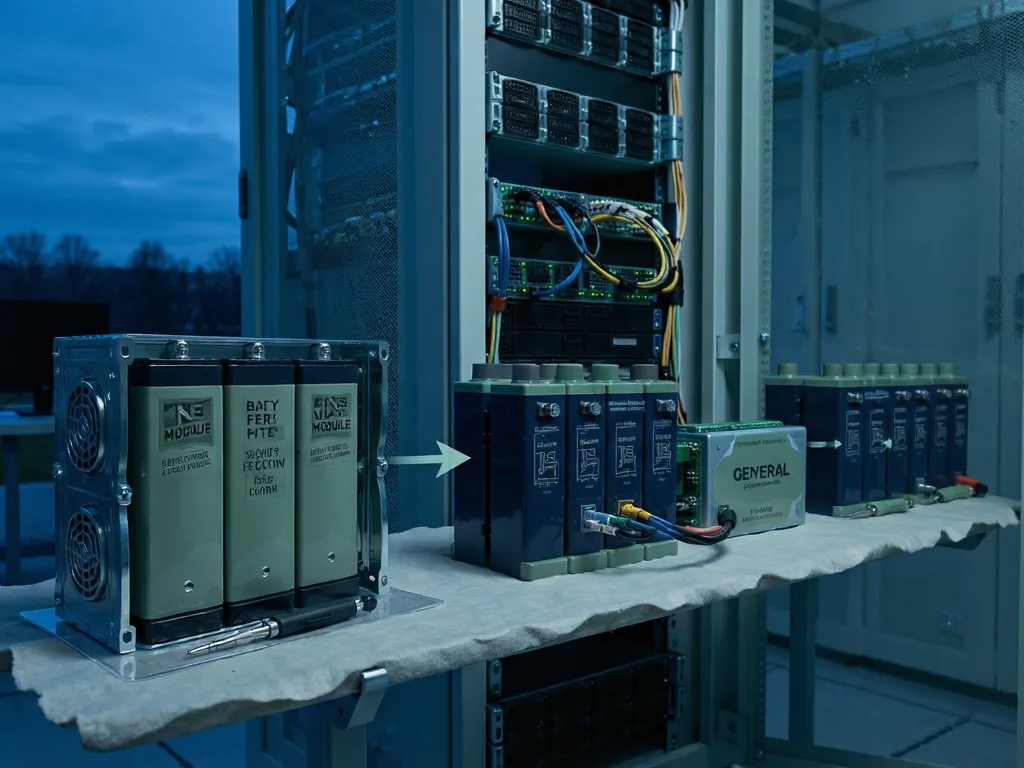
Why centralized backup protection is under pressure
One major factor is the rise in data center power consumption. The more power a facility draws during normal operations, the more backup capacity it needs to support critical loads during an outage. Because uninterruptible power supply systems can be expensive to deploy and often require battery replacements every 3 to 5 years, operators experiencing rapid power growth may be motivated to evaluate alternatives.
A second driver is increasing use of on-site power generation. When facilities add generation assets to supplement or reduce reliance on the grid, the preferred response to a power disruption may be immediate transfer to on-site generation rather than depending solely on a centralized uninterruptible power supply to bridge the gap. Some newer power protection architectures are designed specifically to support that model.
The emerging options at a glance
| Option | Primary role | Duration or scale mentioned | Main tradeoff |
|---|---|---|---|
| Traditional centralized uninterruptible power supply | Short-term bridge and voltage regulation for servers and other information technology equipment | Many systems are designed to bridge only 10 to 15 minutes | Battery replacements every 3 to 5 years; floor space in centralized rooms |
| Battery energy storage systems | Larger stored energy for longer backup and renewable energy use | Can support loads for hours, depending on size and configuration | Higher upfront investment and more complex integration |
| Rack-level batteries | Localized backup power inside each rack | Reduces dedicated floor footprint and may reduce heat concentration | Periodic replacement and lifecycle management remain concerns |
| Buffer modules | Absorb brief interruptions or voltage fluctuations while power transfers | Historically milliseconds; newer systems up to 20 seconds | Useful only when backup need is short enough for generation startup |
| On-site microgrids | Serve a substantial share of power needs on an ongoing basis | May reduce reliance on large centralized backup for extended coverage | Still needs power conditioning, ride-through protection, surge protection, or localized energy storage |
This table does not rank the technologies. Each addresses a different time scale, space constraint, or energy strategy.
Battery energy storage systems move backup from minutes to hours
Battery energy storage systems use high-capacity batteries to store large amounts of electricity. Today, they are most commonly deployed to capture energy from renewable sources such as solar or wind for later use. They can also play a role in data center backup power strategies.
Battery energy storage systems and uninterruptible power supply systems both rely on stored battery power. The difference is scale. Battery energy storage systems are typically designed on a much larger scale. That distinction matters because a battery energy storage system deployment can provide backup power for much longer periods than a traditional uninterruptible power supply. While many uninterruptible power supply systems are designed to bridge only 10 to 15 minutes, battery energy storage systems can support loads for hours, depending on system size and configuration.
The tradeoff is cost. Battery energy storage generally requires a higher upfront investment and more complex integration. For data centers that experience longer outages, want to store renewable energy, or are building more flexible on-site energy strategies, it can be an attractive alternative or complement to traditional backup infrastructure.
Rack-level batteries change the space equation
Most data center uninterruptible power supply systems are centralized, supporting dozens or even hundreds of servers from a single installation. That model is relatively straightforward. It also consumes valuable floor space that could otherwise be used to increase density and capacity.
Rack-level batteries address that challenge by placing backup power directly inside the rack. In effect, they provide localized power protection without requiring the same dedicated floor footprint as a large centralized system. They can also help reduce the heat concentration associated with larger battery rooms or uninterruptible power supply installations.
The limitation is that rack-level batteries share some of the same constraints as traditional uninterruptible power supply systems, including periodic replacement and lifecycle management. Still, they offer important space-saving advantages at a time when many operators are under pressure to maximize capacity within existing facilities.
Buffer modules target the seconds between failure and restart
As their name implies, buffer modules are designed to absorb brief power interruptions or voltage fluctuations. If a server suddenly loses its primary power source, a buffer module can deliver enough energy to keep the equipment running while power is transferred to another source.
Historically, buffer modules could bridge only milliseconds of downtime. Newer systems, however, can provide coverage for up to 20 seconds, long enough in some cases to support the startup of a diesel generator or another on-site generation source.
That capacity makes buffer modules a possible alternative to traditional uninterruptible power supply deployments in certain environments. If the goal is to maintain server operation only long enough for on-site generation to come online, buffer modules may offer a lower-cost, lower-maintenance option than a full backup system.
Microgrids can reshape the whole backup plan
Most data centers still rely primarily on the utility grid, using on-site generators only for backup or supplemental power. But some facilities are investing in on-site microgrids: collections of generation and energy assets capable of serving a substantial share of the facility's power needs on an ongoing basis.
In the right configuration, a microgrid can reduce dependence on traditional uninterruptible power supply architecture by improving resiliency and enabling faster transfer to local power sources. If sufficient generation capacity is available and the system is designed with appropriate redundancy, the facility may rely less on large centralized systems for extended backup coverage.
That said, microgrids do not automatically eliminate the need for power conditioning or ride-through protection. Data centers still need to protect information technology equipment from voltage fluctuations and short transfer gaps, whether through surge protection, localized energy storage, or other power quality solutions.
The practical answer is often hybrid
For many operators, the best answer will not be to replace uninterruptible power supply systems entirely, but to combine them with newer technologies.
A data center might use rack-level batteries to recover floor space, buffer modules to bridge short transfer events, or battery energy storage systems to support longer-duration backup and renewable energy storage. Facilities with on-site generation or microgrid investments may also find that a hybrid architecture delivers better economics and resiliency than relying on conventional uninterruptible power supply systems alone.
As power demands rise and infrastructure strategies evolve, uninterruptible power supply systems are likely to remain important, but they are no longer the only option. For a growing number of data centers, the future of backup power points toward a more distributed, more flexible approach that is aligned with broader energy strategy.
What readers should watch next
The decision depends less on choosing one technology and more on matching duration, space, and energy strategy to the facility's operating pattern. A site with frequent brief interruptions may benefit most from buffer modules. A site with longer outage exposure and renewable generation may look toward battery energy storage systems. A high-density facility trying to reclaim floor space may prioritize rack-level batteries. A site building on-site generation or microgrid assets may use a hybrid design rather than a single centralized architecture.
The uncertainty lies in how far each alternative can replace traditional protection. Longer runtime, lower maintenance, and better space efficiency are attractive, but they come with different capital, integration, lifecycle, and power quality requirements. The provided source does not specify costs beyond these general tradeoffs, nor does it identify particular vendors, sites, or outage records.
Source note
Source material: provided data center backup power overview. No update date was provided in the source.
Reader notes 0
- No notes yet. Corrections and first-hand test results are welcome.